Observatoire National du Numérique
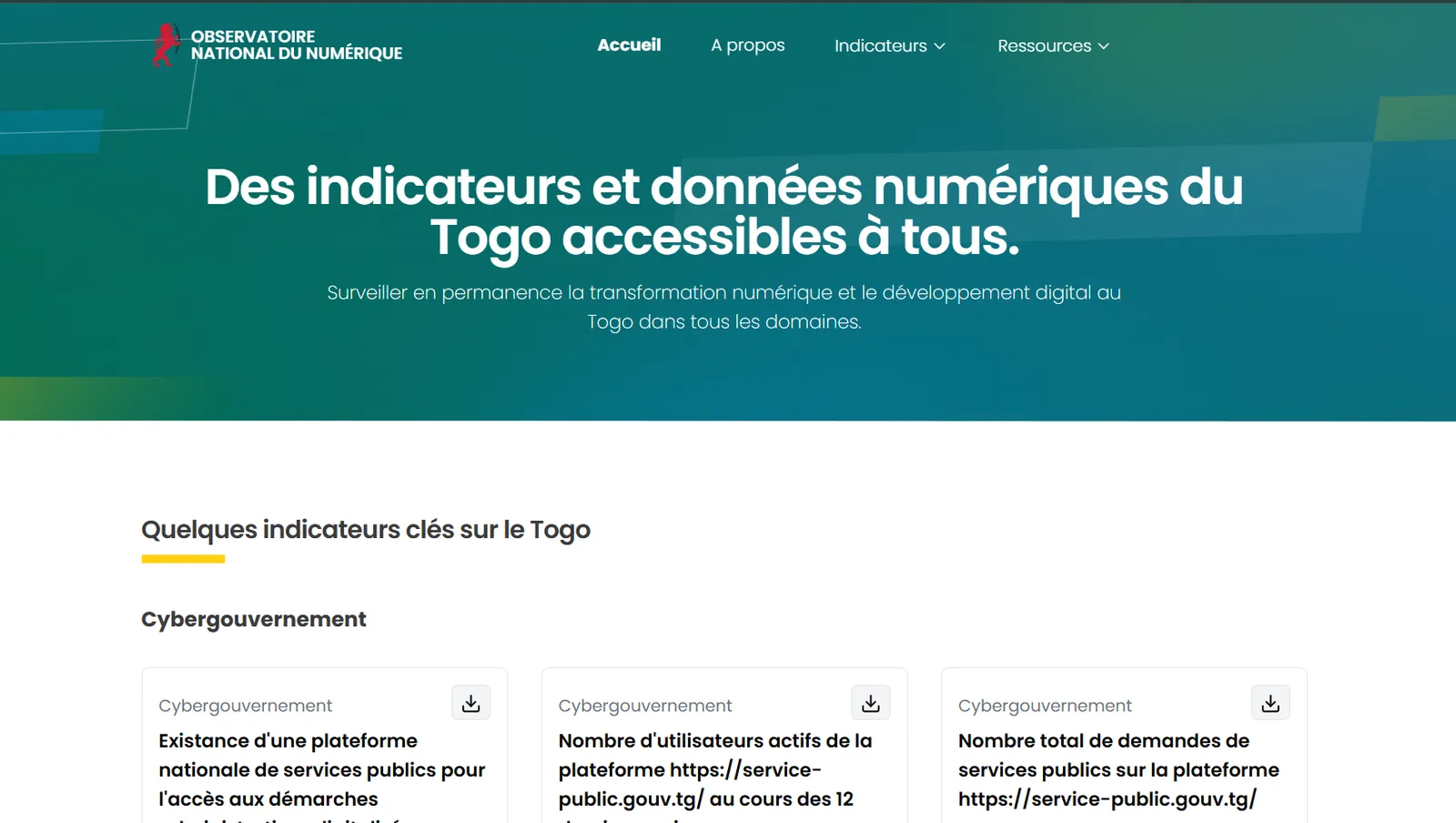
The National Digital Observatory is a centralized platform that aggregates and publishes Togo’s national digital indicators, offering data-driven insights to support evidence-based governance. It empowers the public, government, and international partners with structured analytics and contributes to the nation’s annual digital development report.
- Role
- Front-end Engineer
- Timeline
- March 2025 to present
- Team
- GIZ ProDigiT, with the UI/UX unit and backend team
Context
As part of its Togo Digital 2025 strategy, Togo needed a single, trustworthy place to measure its digital progress. The Observatoire National du Numérique (National Digital Observatory) is that place: a centralised platform that collects and publishes the country's national digital indicators, turns the data into insight, and produces Togo's annual digital development report.
The platform is built under ProDigiT, the Digital Transformation of the Togolese Economy programme implemented by GIZ. It is delivered for Togo's Ministry of Digital Economy and Digital Transformation (MENTD), with infrastructure support from the national digital agency, Agence Togo Digital.
It serves three very different audiences: the general public, government bodies, and international institutions. Each of them needs to find, understand and trust the same data.
My role
I'm the front-end engineer on the platform. That covers the whole path from interface design to production: shaping the screens with the UI/UX unit, building them, connecting them to the backend, and keeping them secure, fast and tested.
What I built
Public and administrator interfaces. With the UI/UX unit I designed and proposed interface models for two sides of the platform: the public site, where anyone can explore indicators, and the administrator back office, where the data is managed and published. I then built both as responsive, accessible and maintainable front ends that follow the platform's technical and functional architecture.
Data visualisation. National indicators are only useful if people can read them. I built interactive data-visualisation components and chose the right graphical representation for each kind of indicator, so trends, comparisons and breakdowns are clear without needing a statistics background.
API integration. Every module on the platform pulls its data live from backend APIs. I integrated those APIs so indicators are retrieved and presented dynamically rather than hard-coded, which means newly published data appears without a front-end release.
Engineering for a government platform
Security. A national data platform with an administrator side has to be locked down. I implemented the front-end security measures: authentication best practices, secure handling of data flowing between the browser and the APIs, and protections aligned with modern web standards.
Performance. Users reach the platform on all kinds of devices and connections, so I optimised the front end for fast loading, smooth interactions and efficient resource use.
Quality. I defined and ran unit and integration tests to keep the platform reliable as it grows, and contributed to the CI/CD pipelines that build and deploy it.
Stack
Next.js, TypeScript and Tailwind CSS on the front end, consuming the platform's backend APIs.
Outcome
The Observatory is live at observatoire.numerique.gouv.tg. It gives citizens, government and international partners one structured, public source for Togo's digital indicators, supports evidence-based policy making, and underpins the country's annual digital development report.